Agriculture businesses run to a rhythm that most off-the-shelf finance software was never built for. Revenue arrives in seasonal waves tied to harvest, weather, and commodity pricing, while costs — inputs, labour, equipment, freight — run all year round. Add multiple properties, a supply chain that runs from paddock to processor to retailer, and compliance and traceability requirements on top, and it’s easy to see why generic accounting software or a patchwork of spreadsheets stops being enough.
Where Generic Systems Fall Short for Agricultural Operations
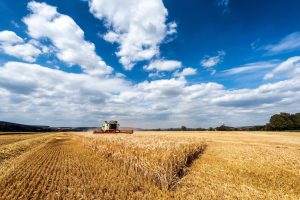
Basic accounting packages are built around steady, predictable monthly revenue — not a business that might do most of its trading in a six-week window. That mismatch shows up everywhere: cash flow forecasts that don’t reflect the real seasonal cycle, inventory systems that can’t handle perishable or bulk commodity stock properly, and no easy way to see cost and margin across multiple properties or entities in one place.
How Dynamics 365 Business Central Supports Agricultural Businesses
Business Central was designed with exactly this kind of operational complexity in mind. Its financial management core supports multi-entity and multi-location structures, so businesses running several properties, depots, or related entities can consolidate financial reporting without exporting everything to Excel and reconciling it by hand.
On the operational side, inventory and warehouse management can track stock across multiple locations, including bulk and batch-managed goods, giving accurate visibility over what’s on hand, where it sits, and what it’s worth — critical for anything involving perishable or commodity-priced stock. Demand and purchase planning tools help forecast input requirements against seasonal cycles, rather than relying on gut feel or last year’s numbers. And because it’s a cloud platform, managers and staff can check inventory, approve purchase orders, or review cash position from a property, a truck, or a home office — not just from a desk in town.
Cash Flow Visibility That Matches the Real Business Cycle
Perhaps the biggest single benefit for agricultural businesses is proper cash flow forecasting that accounts for seasonality rather than assuming even monthly revenue. Business Central’s reporting, extended through Power BI, lets finance teams build a rolling forecast that reflects when money actually comes in and goes out — making it much easier to plan financing, input purchases, and capital spending around the real cycle of the business rather than a generic financial calendar.
Supply Chain From Paddock to Market
Agricultural supply chains typically involve multiple handoffs — from property to storage, storage to processor or exporter, processor to retailer or distributor — each with its own documentation, pricing, and compliance requirements. Business Central’s supply chain and traceability functionality can track a batch or lot through each of these stages, supporting the kind of provenance and compliance reporting that’s increasingly expected by processors, retailers, and export markets alike.
FAQs: Business Central for Agriculture
-
How can Dynamics 365 Business Central help agriculture businesses manage seasonal cash flow?
Dynamics 365 Business Central helps agricultural businesses create more accurate cash flow forecasts by considering seasonal income patterns, upcoming expenses, input purchases, labour costs, and operational cycles. This allows farmers and agribusiness managers to plan funding and spending based on real business conditions.
-
Can Business Central manage multiple farms or agricultural properties in one system?
Yes. Business Central can support businesses operating across multiple farms, properties, depots, or entities. It provides consolidated financial reporting and operational visibility without requiring separate spreadsheets or disconnected accounting systems.
-
How does Business Central help track agricultural inventory and stock levels?
Business Central provides inventory management capabilities that allow businesses to monitor stock across locations, track quantities, manage batch information, and understand inventory value. This is useful for managing crops, livestock inputs, feed, fertiliser, equipment parts, and other agricultural supplies.
-
Can Business Central handle seasonal purchasing and supply planning?
Yes. Business Central helps businesses plan purchasing around seasonal requirements by analysing inventory levels, demand patterns, and expected operational needs. This reduces the risk of over-ordering or running short during critical farming periods.
-
Does Business Central support agricultural traceability requirements?
Business Central can support traceability by tracking items through batches, lots, locations, and supply chain stages. This helps agricultural businesses maintain better records for processors, retailers, export partners, and compliance reporting.
-
How can farmers use Business Central to improve profitability analysis?
Business Central allows businesses to analyse costs, revenue, and margins across different areas of operation, such as individual properties, crops, livestock operations, or business units. This helps identify which activities are delivering the strongest returns.
-
Can Business Central integrate with other agricultural technology systems?
Yes. Business Central can integrate with other Microsoft solutions and third-party applications, allowing agricultural businesses to connect financial data with operational systems, reporting tools, and industry-specific platforms.
-
Is Dynamics 365 Business Central suitable for growing agribusinesses?
Yes. Business Central is designed to scale as agricultural businesses expand. Whether adding new properties, increasing production, entering processing, or growing distribution networks, the system can adapt without requiring a complete technology replacement.
-
How does Business Central improve decision-making for agricultural managers?
By bringing financial, inventory, purchasing, and operational information into one platform, Business Central gives managers a clearer view of business performance. Real-time reporting helps them make faster decisions about spending, production, and supply chain management.
-
Can Business Central help manage agricultural compliance reporting?
Business Central can help organise and maintain important business records by providing structured data on inventory movements, purchases, suppliers, and transactions. This makes preparing reports and meeting documentation requirements easier.
-
Does Business Central work for agricultural businesses with remote teams or multiple locations?
Yes. As a cloud-based ERP system, Business Central allows authorised users to access information from different locations, including farms, warehouses, offices, and remote worksites, using connected devices.
-
Why should agriculture businesses choose Business Central instead of spreadsheets?
Spreadsheets can become difficult to maintain as agricultural operations grow. Business Central provides a centralised system for financial management, inventory tracking, forecasting, and reporting, reducing manual processes and improving accuracy across the business.
Built to Scale With the Business
Because Business Central is a Microsoft cloud platform, it grows with the business rather than requiring a full system replacement every time the business changes shape — whether that’s adding a new property, moving into processing or value-add activities, or expanding into new markets. It also provides a natural foundation for future AI-driven forecasting and automation as those tools mature, without locking the business into another costly system change down the track.
If seasonal cash flow, multi-property reporting, or supply chain visibility are ongoing headaches for your agricultural business, Austral Dynamics can walk you through what a purpose-fit Business Central setup would look like.
Written by Tanisha | Austral Dynamics